


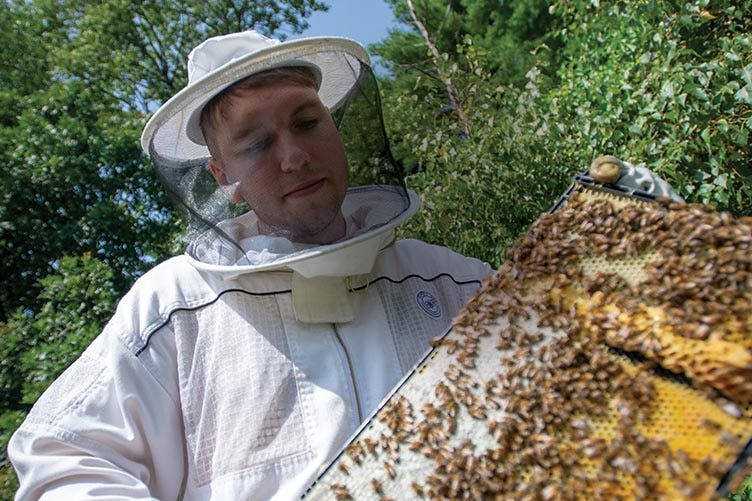
Some days begin with 50,000 angry bees and end in the back of a police cruiser.
Others begin in the back of a police cruiser and end with being rescued by a drunk driving Hell’s Angel karate master.
Picture this.
It’s nearly 12 o’clock on a hot spring night. You and your fiancé are driving a truck full of thousands of bees. They are pissed (the bees, though your betrothed isn’t thrilled either).
You’re many hours late delivering the bees to their apiary. Everything went wrong today—trailer hitch problems, missing ratchet straps, traffic. Then the best Italian1 bee breeder in the Northeast dragged you on a backroads dusk chase across state lines, only to detour for a spontaneous raccoon hunt—or maybe it was a porcupine? He did shoot something while you loaded the bees.2 The gunshot sound, plus the long drive, is why they’re pissed.3
When you finally reach the farm (owned by a family you’ve been warned will “slit your throat if you cross them”4), you drive your truck to the apiary site, start unloading, and then realize two things:
Today is actually your first time ever wearing a beekeeping suit.
Your Toyota Tacoma is now completely and totally stuck in the mud.5
Picture a furious, airborne cloud, swarming your barely protected body, trying to kill you, while you fruitlessly rock your 4,000-pound truck back and forth in the mud.
You realize this truck is going nowhere without a tow. It’s the middle of the night, there’s no Uber in rural New England, and everyone you know is asleep. So you take the only option left to get a ride home and figure it out tomorrow— call the police.6
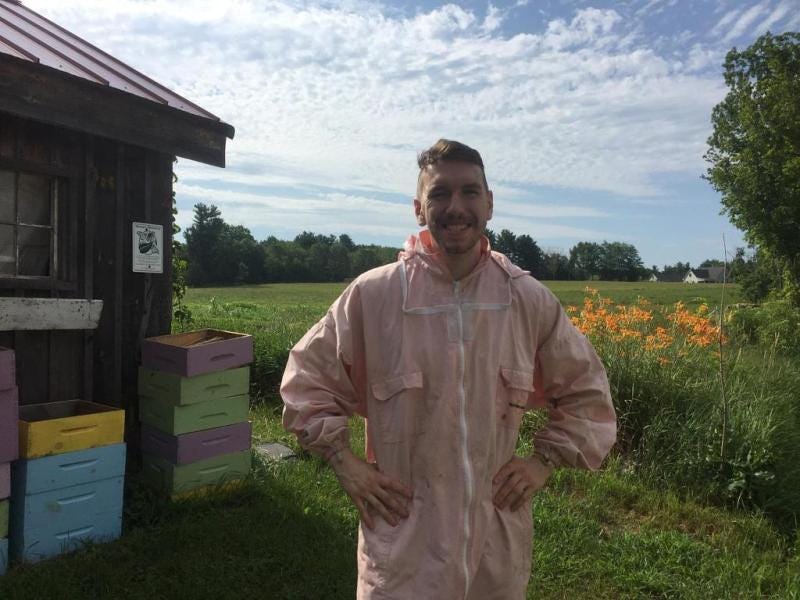
When the cruiser finally pulls up, the officer finds us standing in the dark—clad head-to-toe in mismatched white and pink bee suits, smeared with dirt and dead bees, slightly stumbling from exhaustion.
He rolls down his window, pauses for a moment, and says: “Is it a full moon or something?”7
After you explain the situation to a surprisingly understanding officer, he chuckles and offers you a courtesy ride back to Newmarket. As we crawl into the back, I glance at the cruiser’s dashboard clock. It reads 0000. Our new day has begun in a cop car.
Later that day, after a little sleep, a friend gives me a lift back to the farm in his dad’s truck, only to realize it has no tow hitch. As I contemplate the last 12 hours from hell, an angel pulls up beside us in a gigantic Dodge Ram 2500. The side of the truck is emblazoned with a huge logo for some martial arts studio—Tokyo Mike’s8 or something like that.
The driver wears sunglasses, long grey braids, and a Hell’s Angels biker jacket.
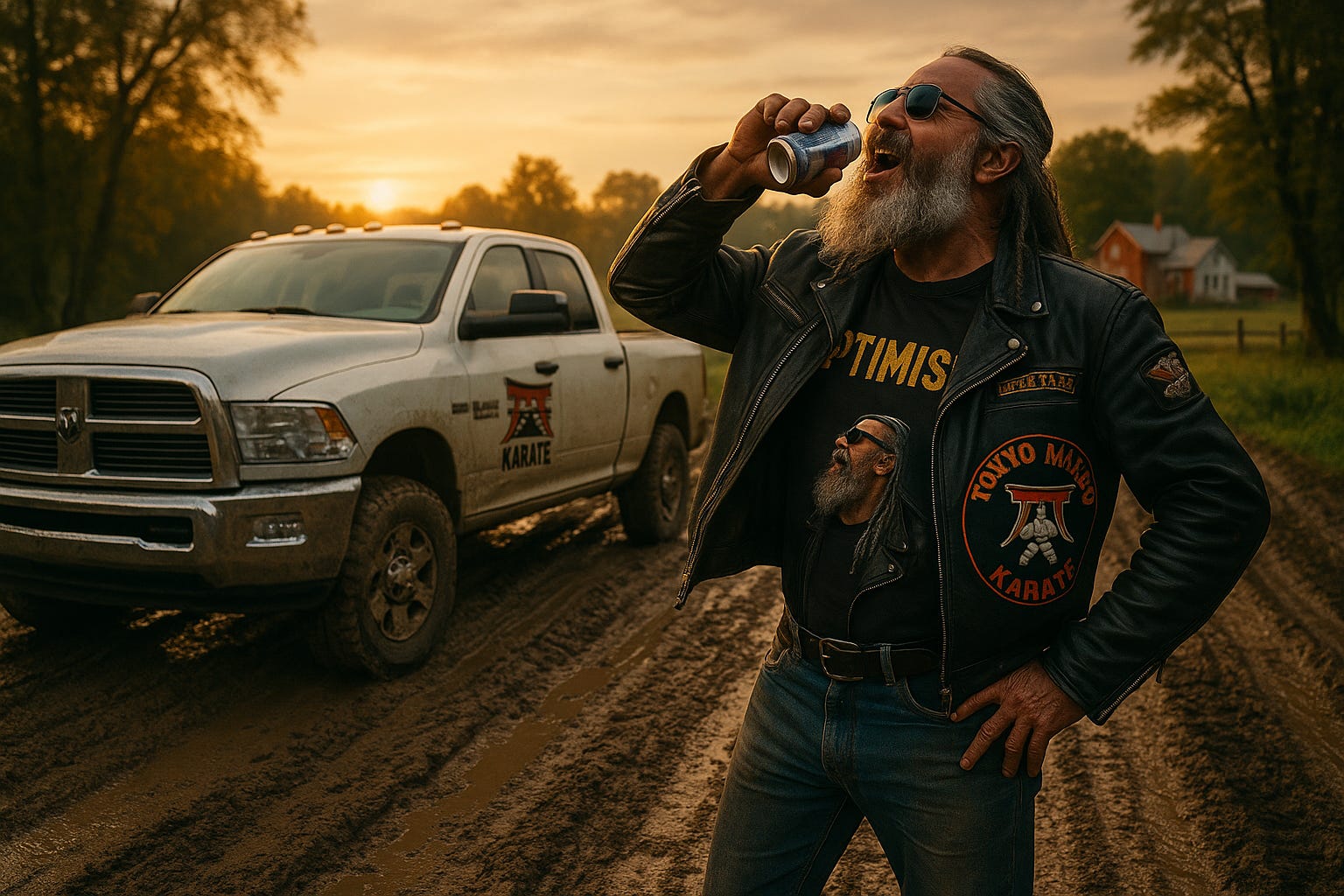
He surveys the situation. “Yep. I been there.” Without another word, he starts digging through his backseat for a tow chain.
“I have to ask. Are you Tokyo Mike?”
“Hell yeah I am!”
Suddenly, I hear a psssht sound.
“Shit!!”
Somehow, Mike has punctured a loose beer can in his backseat. Ever the man of action, he shotguns it immediately, then hitches up my truck and tows it out of the mud like it’s nothing.9
Thus began my journey as a beekeeper—and, as I would later realize, an optimist.
Bees or Bongos
When I was 21, my girlfriend and I co-founded a honey business.
It was called Half-Acre Beekeeping, and it was born from a blend of curiosity, naivety, and ambition— a combo I now recognize as the ideal ingredients for entrepreneurship.
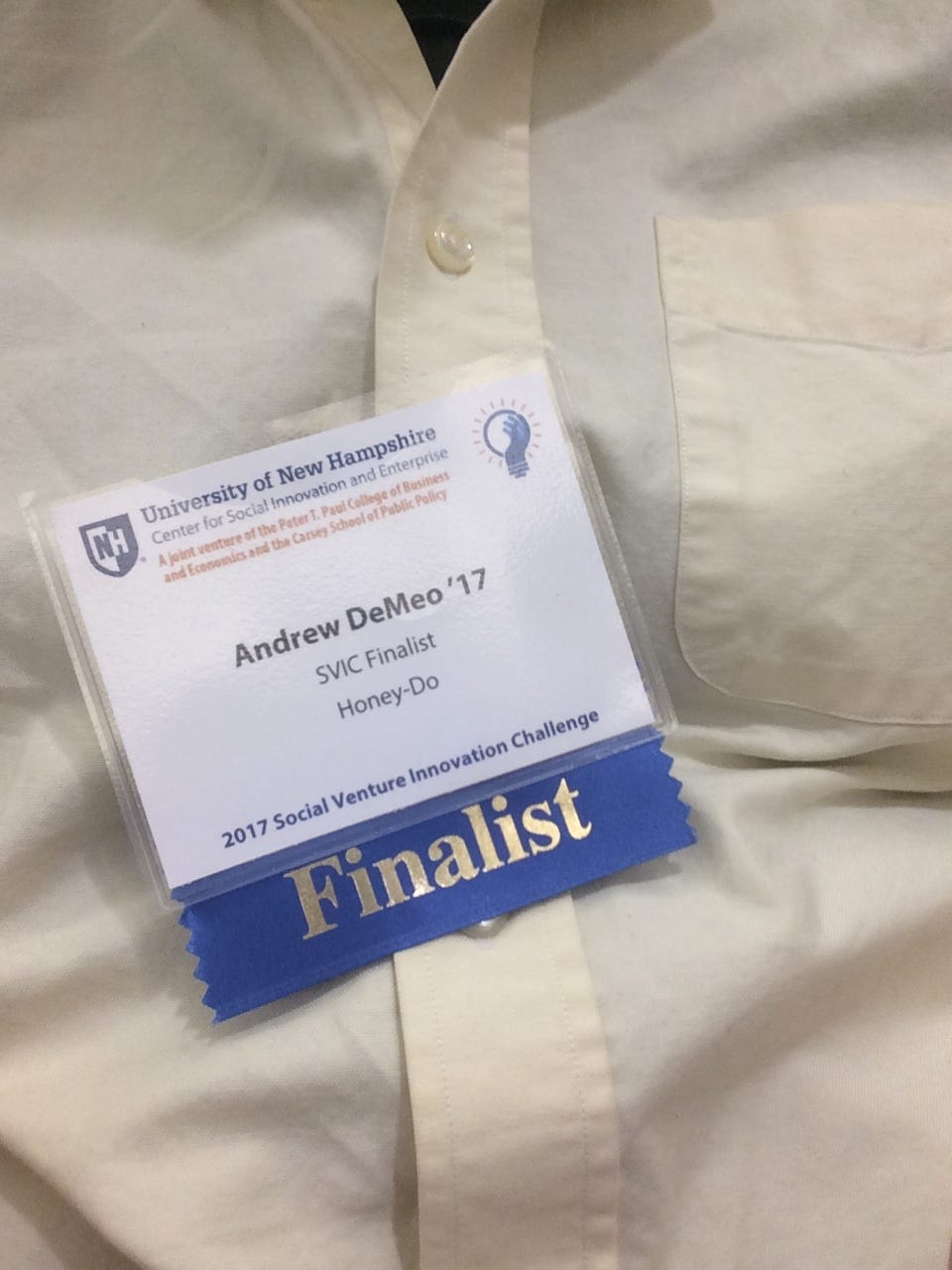
I was a senior at the University of New Hampshire when I heard about something called the NH Social Venture Innovation Challenge. The premise was simple: students pitch an idea that could become a sustainable business also accomplishing some social or environmental good. Winners get a no-strings-attached $5,000 cash prize.
I liked the concept, but didn’t have an idea. Luckily, my girlfriend at the time (now my wife) had just joined an urban beekeeping club in Boston. She started telling me about the problems facing honeybees—declining populations, weakened immune systems, entire colonies collapsing.
Like many people, I’d heard the phrase “the bees are dying” before, but I didn’t know what it actually meant. The more I looked into it, the more I realized that bees and their predicaments really mattered. So together, we submitted a proposal for a business that could make honeybees healthier, help pollinate farms, and connect consumers to local honey.
We had a lot of help along the way. UNH had just launched a new Entrepreneurship Center the year before, led by an intrepid problem solver named Ian Grant—a self-described “incurable optimist” who coached and mentored students like me through a range of competitions and startup ideas.
Ian would go on to shape the trajectory of my life—and the lives of thousands of other students. For this reason, I later chose him as the first ever guest for the Granite Goodness podcast.
#1 Ian Grant: From Junior Olympics to African Wildlife, A Journey in Entrepreneurship and Impact

In the first episode of Granite Goodness, Andy chats with his friend and mentor Ian Grant, a serial entrepreneur and self-described incurable optimist who’s had more career pivots than a ballet dancer...
But at the time, he was just this guy giving me some very unconventional advice, like “You should wear a beekeeping suit to the competition.”
I thought he was joking. It sounded absurd. But Ian was serious.
“There’s no dress code in the rules,” he said. “Everyone else will show up in suits and ties. You have a chance to flip the script, throw your competitors off balance, get noticed—and have fun doing it.”
So I did it.10
And Ian was right! I ended up winning first place, beating 63 other teams.11
Of course, it wasn’t just the suit. Ian also coached me through my pitch—helping me shape the story, tighten the delivery, and speak with confidence. His guidance turned a rough idea into a compelling presentation. You might say that while I had the bees, Ian helped me find the buzz.12
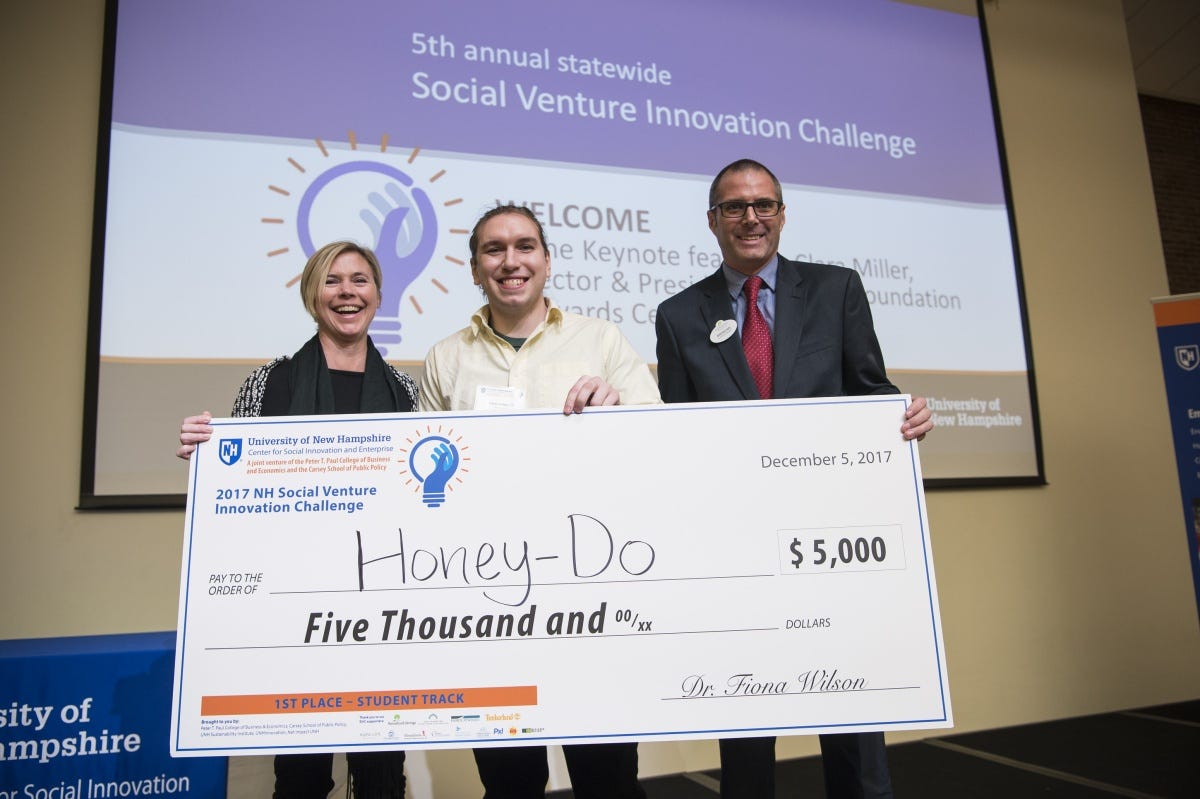
With my new crash course in entrepreneurship, an extra $5,000 in my pocket, and graduation fast approaching, I now had a choice to make.
Do I:
Walk away and blow the cash prize on that electric drum set I’d always wanted?
Or use the money to seed something real?
My girlfriend’s dad summarized the options for me in simple terms:
“Bees or bongos, kiddo.”
I chose bees.
“The Bees are Dying”
When most people picture bees, they imagine honeybees—plump and golden, buzzing industriously around wildflowers or wooden boxes. That image is Apis mellifera, a species native to eastern Europe, the Middle East, and parts of Africa, first brought to North America by colonists in the 1600s.
Today, most honeybees in the U.S. are managed livestock, bred and deployed for agricultural use, and critical in some $15-20 billion worth of crop production. Many participate in migratory beekeeping, a system where semi-trucks haul thousands of hives across America from one massive monoculture crop to the next—almond groves in California, apple orchards in Washington, blueberry fields in Maine.
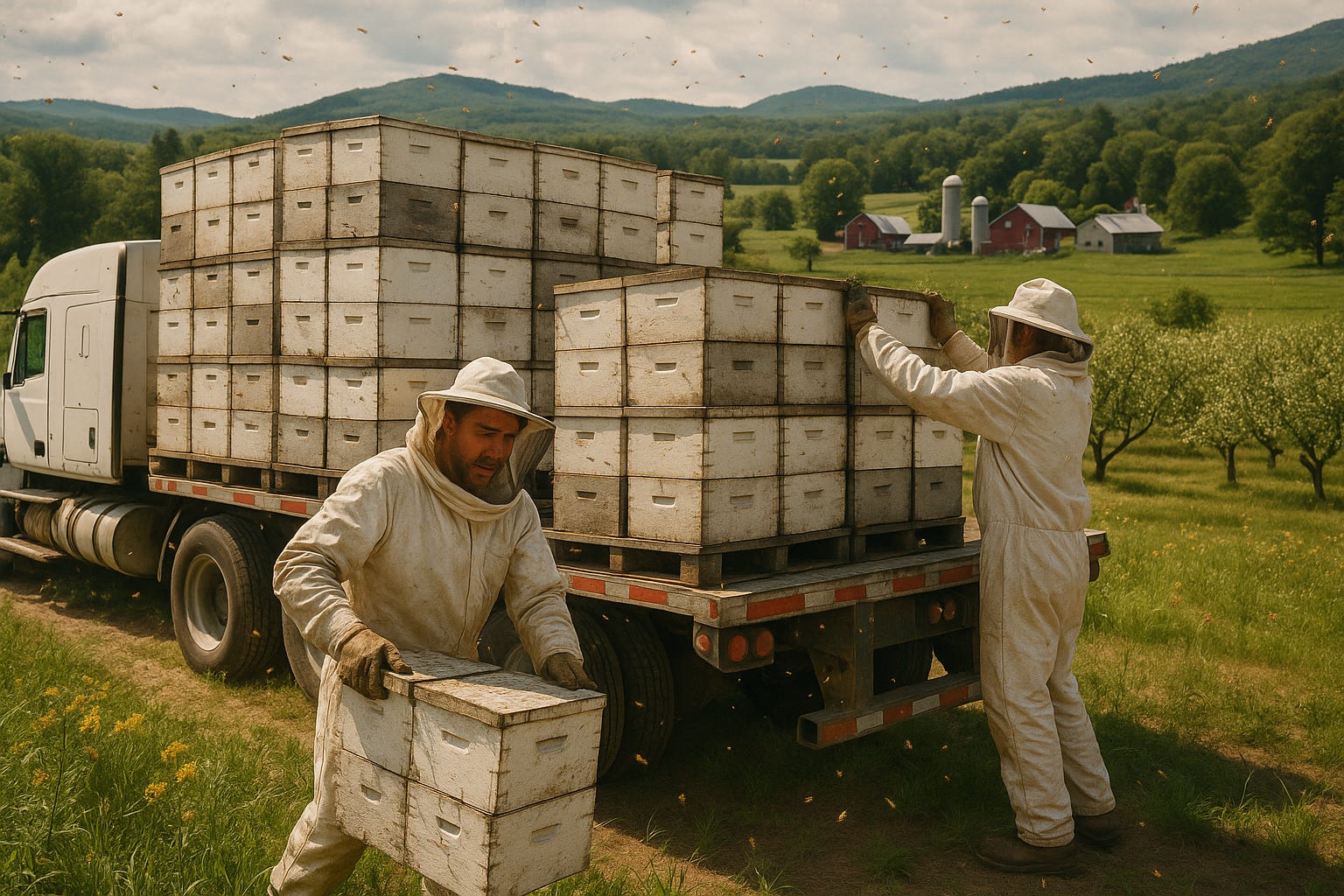
This system is efficient, but it’s tough on the bees.
Constant travel weakens their immune systems and helps spread disease. Monocultures offer poor nutrition; acres of identical blooms with little dietary variety. Add in the widespread use of pesticides known to impair bee health, and it’s no surprise colonies suffer.
My wife and I started Half-Acre Beekeeping to confront these challenges. The idea was simple: build a better system.
We would keep bees on local farms year-round, avoid pesticide classes harmful to bees, and sell shares of each hive to consumers who would receive that hive’s annual honey crop.
In theory, it was a win for:
Bees, who would be healthier and happier.
Farmers, who could get pollination without relying on migratory beekeeping.
Consumers, who’d enjoy local, traceable honey.13
In theory.
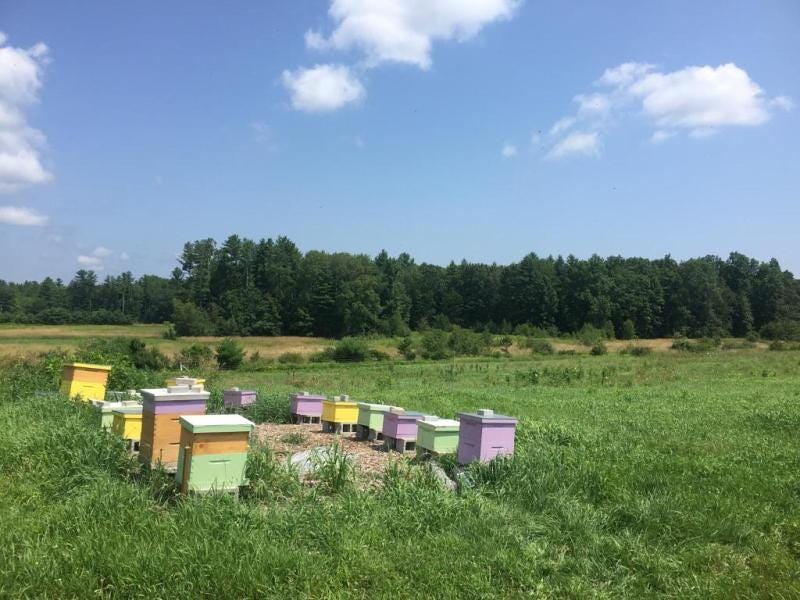
But as with many things, the devil is in the bee-tails. (Seriously—they sting.)
At the time, the biggest worry in the public imagination was Colony Collapse Disorder (CCD)—a term coined in the early 2000s to describe the mass disappearance of worker bees from otherwise healthy hives. Sounding biblical and mysterious, it sparked panic.
But the reality was more mundane. By 2007, scientists had already pointed to the usual suspects: mites, pesticides, pathogens, poor nutrition. The real challenge wasn’t mystery—it was complexity.
Still, the media narrative stuck. The scientific language of “We’re not sure yet—it’s likely a mix of factors,” morphed into the media take of “Nobody knows what’s killing the bees!”14
The truth is, CCD was never some mystery plague. Honeybee health has always reflected how we manage them. The panic said as much about our discomfort with uncertainty as it did about our collective misunderstanding of bees themselves.
And we often misunderstand honeybees.
Yes, they’re struggling—but they’re not endangered. In terms of our relationship to them, they are closer to livestock. Like cows, they’re bred, moved, and managed by people. You wouldn’t worry about cows going extinct—but you’d care if they were mistreated.
Same goes for honeybees. Their decline threatens agriculture, not their survival.
But here’s the uncomfortable question I didn’t ask at first:
What might their success threaten?
The Bees We Don’t See
Honeybees may be the face of environmental concern, but they’re not the only bees—or the most ecologically important.
North America is home to thousands of native bee species—like the rusty-patched bumblebee and mason bee—that don’t make honey, are hard to manage, and are often overlooked. Yet they’re vital pollinators, many now endangered due to habitat loss, pesticides, climate change, and competition from introduced species.
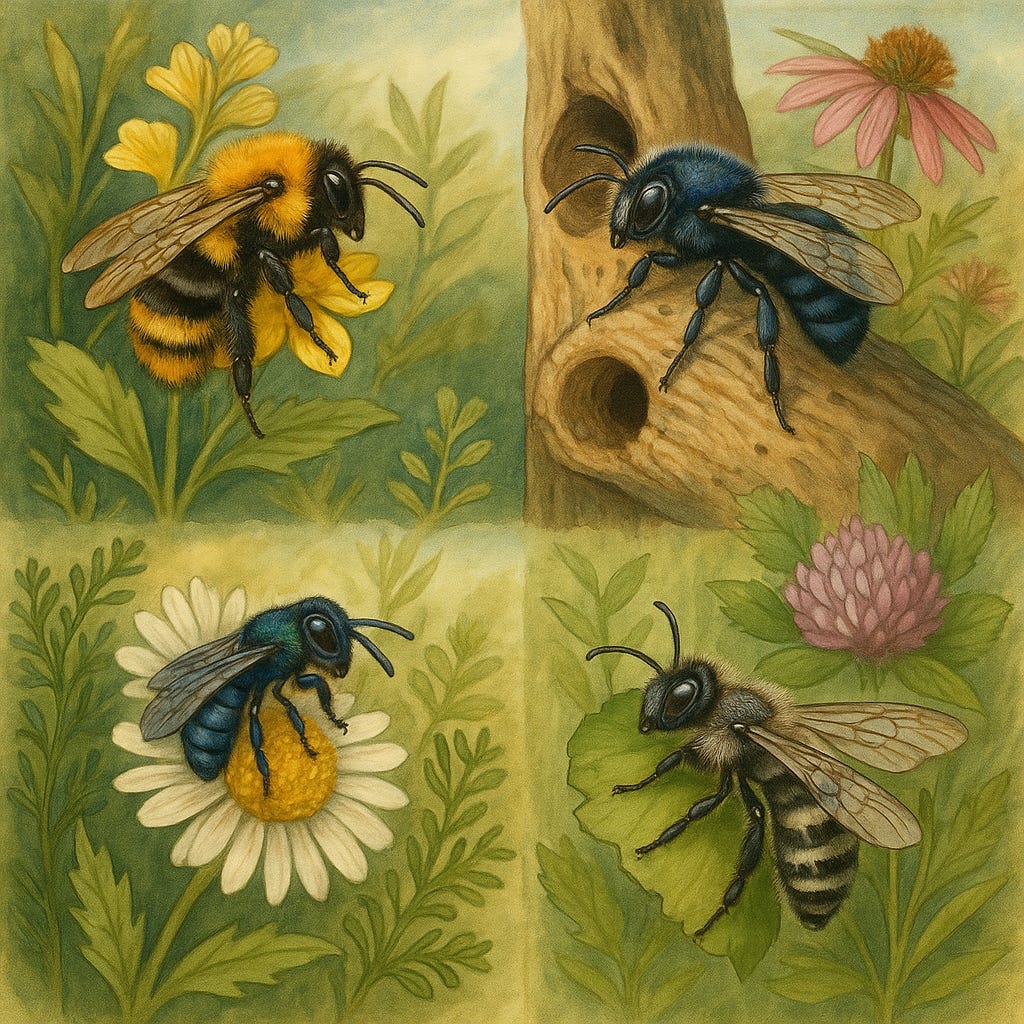
Those “introduced species” include honeybees. Often thought to peacefully coexist with other pollinators, emerging science tells a more complicated story, showing they can outcompete native bees for food, spread diseases, and disrupt local ecosystems.
The inconvenient truth I didn’t understand when we started Half-Acre Beekeeping is this: if you truly want to help the bees, becoming a beekeeper doesn’t just fall short—it might actually be one of the worst things you can do.15
To be clear, I’m not anti-honeybee. I love them—truly. And I really love honey. It’s an extraordinary gift of nature, produced by creatures we should seek to understand, respect, and care for.
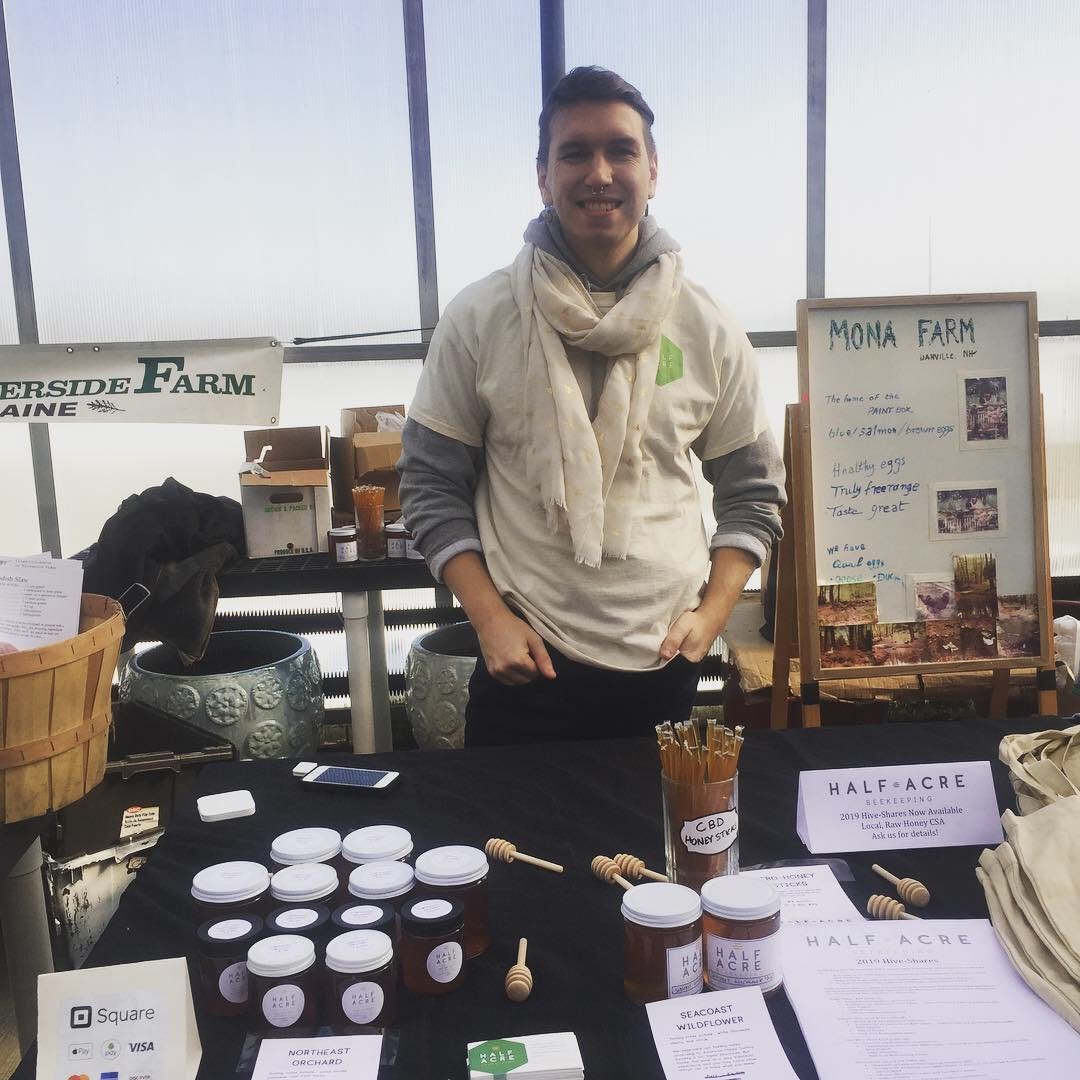
But I do believe we need to be thoughtful and intentional about where, when, and how we introduce honeybees into the environment. Their presence isn’t always neutral—in some cases, it can do real harm. I can say that with some hard-earned credibility.
Half-Acre Heartache
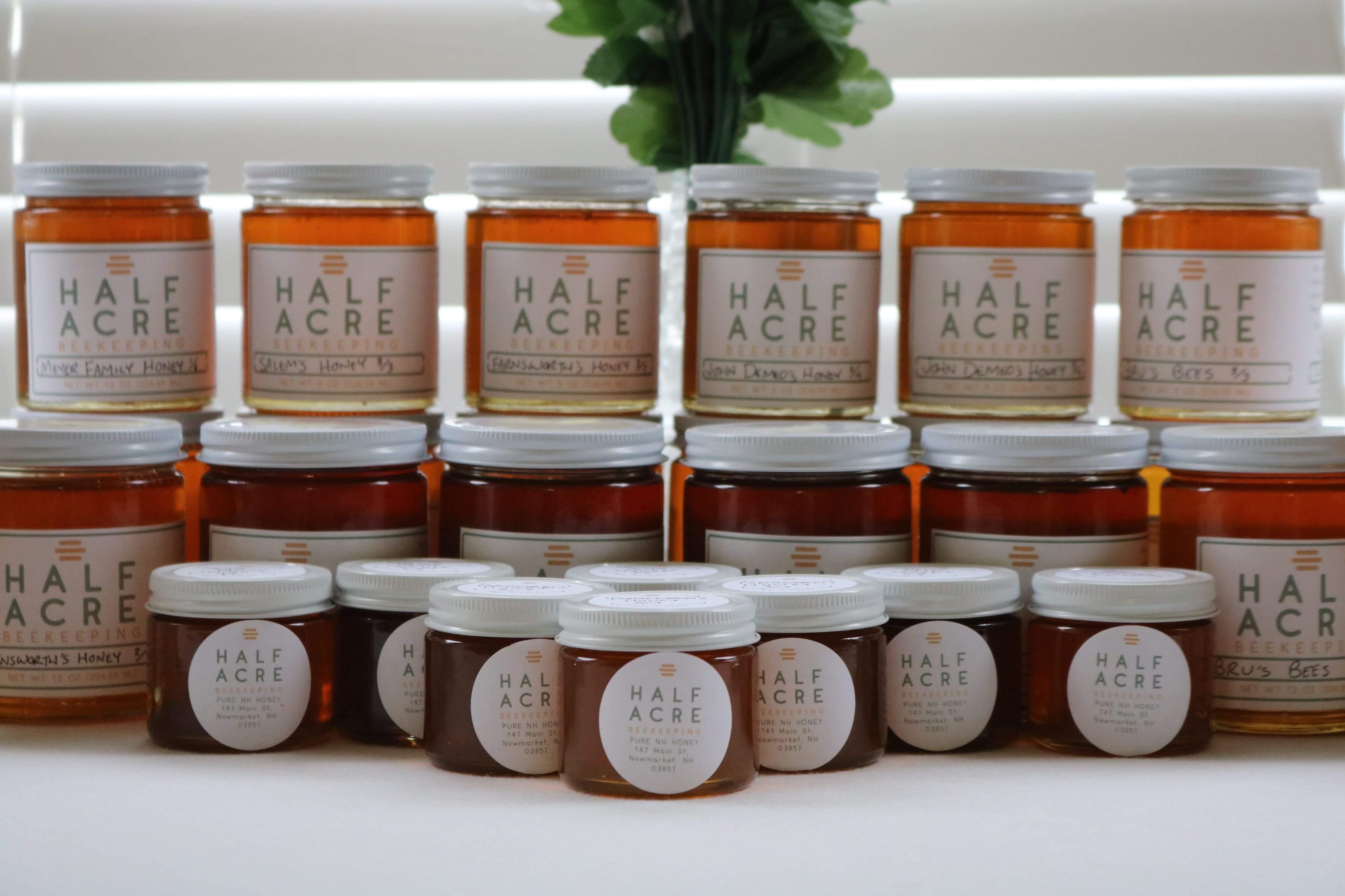
Two years into Half-Acre, business was booming. We had sold out of hiveshares every season, shipped hundreds of pounds of honey, were partnered with 5 different farms, and were on the verge of profitability. We’d even been approached by venture capitalists, who offered to invest in us and possibly produce a TV show about our business.16
Then one day, I came across research that made my stomach drop: growing evidence that honeybees could actually harm native pollinators. The more I read, the more conflicted I felt.
Eventually, I called one of the region’s foremost pollinator experts, Dr. Sandra Rehan—then an Assistant Professor at UNH, and someone many of my friends had done research with.
We asked her directly:
“Is it true that honeybees can harm native pollinators?”
She didn’t dodge the question.
“I’m not going to tell you how to run your business,” she said, “and I understand if your livelihood is at stake. But yes—my expert opinion is that they can and often do.”
That was enough for us.
While Half-Acre may have helped honeybees and supported agriculture, it might have harmed the bees that needed help most. Unlike honeybees, native pollinators are far harder to replace once they’re gone. We weren’t trying to mislead anyone, but I couldn’t shake the feeling that people only cheered us on because they didn’t realize the damage managed bees can do to wild ecosystems.
Thankfully, at that point my wife and I weren’t doing this full-time. We had no employees besides ourselves. We chose to finish out our contracts for the season and then close Half-Acre Beekeeping, in the process taking a total net loss of ~$15,000 of our own money invested in the business.


I suppose there might have been options to pivot, and other bee-based businesses out there carefully navigate this dynamic. But the reality of it is just so complicated. I didn’t want to grow a brand built on a giant misconception, constantly playing word salad to balance lies of omission with a sales pitch.
We began with a dream of doing this for the right reasons. We had to stop for the right reasons too.
I don’t share this story to condemn beekeepers (many of whom are responsible stewards of their hives), paint myself as a moral hero, or suggest my customers were ignorant.17
I share it because that whole journey—Tokyo Mike, the cops, Dr. Rehan, Ian’s optimism, lugging hives through the mud, porcupine hunts, winning competitions, courting investors—ended up teaching me a deeper truth.
There is often a real difference between something that feels good and something that accomplishes real good. And that distinction matters a lot to me.
Real Good? Or Feel Good?
I’ve said it before, but it bears repeating: when most people hear “good news,” they picture something light and shallow—like a firefighter rescuing a kitten or a stranger helping an elderly woman with groceries. These stories are often wedged awkwardly between headlines about war, famine, or political collapse.
But that framing is, frankly, patronizing. It suggests that human suffering can be “balanced out” by a puff piece—an idea that’s both naïve and dismissive. Children dying of preventable illnesses, war, or starvation is an unconscionable tragedy. No amount of cheerful clips offsets that.
If you Google “good news” today, the top result is a site called Good News Network, where the day’s headlines include a university president getting spun around and a sand-sculpting minister.18
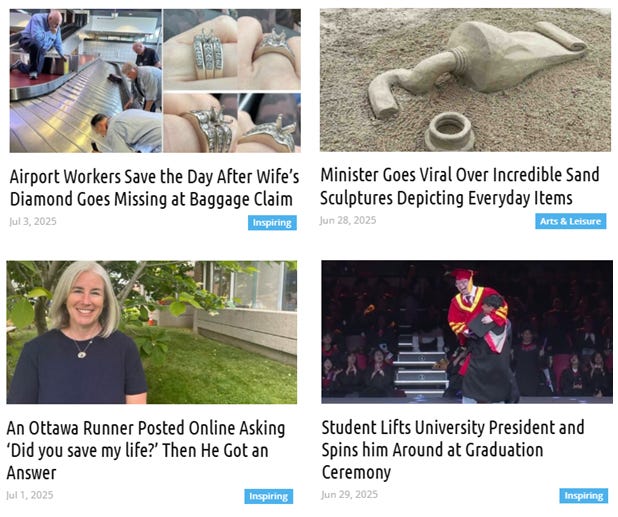
These are pleasant enough. But they’re not meaningful responses to suffering. No one reads about a recovered wedding ring and suddenly feels reassured about starvation in Sudan. Nor should they.
I sometimes wonder if Half-Acre Beekeeping would’ve ended up on one of these fluffy good news sites. And while I’m proud of what we built, I eventually realized much of what we were doing was more performative than substantive— feel-good over real good.
That’s what most “good news” is today: the mirror image of sensationalized crime coverage. Shallow, manipulative, and meant more to distract than inform.
But we’re better than that. I believe we’re capable of—and hungry for—something more.
I know that a better kind of good news exists because I see it. And I’m not the only one.
The name Granite Goodness is a tribute to that belief—not to fluff or fleeting acts of kindness, but to real stories of progress, problem-solving, and possibility. Stories that carry weight and reflect the human drive to make things better.
That metaphor isn’t just figurative. Granite really does shape the region I live in—literally and culturally.
It forms our mountains, our buildings, our past. It stands for strength, endurance, and pride across New England. A spirit that is both substantive and optimistic. Granite, and good.
One year ago, this project started in New Hampshire, where I saw firsthand how much quiet, meaningful work was unfolding in communities across the state. I’ve since come to appreciate that this ethos isn’t just local—it’s regional. From Maine to Connecticut, people are solving problems, building community, and creating the kind of future we all deserve.
So, in celebration of our one-year anniversary—and thanks to overwhelming encouragement—I’m expanding Granite Goodness to cover all of New England.
This week, I’ll launch the first edition of the Good News in New England Newsletter.
(If you’d rather stick with NH-only updates, you can adjust your subscriber preferences here.)
To my fellow New Hampshirites—don’t worry. This project will always be rooted in the Granite State. The Good News in NH newsletter continues, and the podcast will still focus primarily on NH voices.19
That said, the broader vision matters because I believe rational, substantive, optimistic storytelling is just beginning to find its footing.20 And to my surprise, no one’s doing it for New England— so I’m giving it a shot!
Our corner of America is a remarkable place. And New Hampshire is its brilliant black sheep. Don’t just take it from me, here’s what Congresswoman Maggie Goodlander told me when she came on Granite Goodness.
When I meet a cynical, can’t-do person in Congress, my first instinct is to take them to the North Country of New Hampshire—what I believe is the comeback county of America: Coös County. In the Androscoggin Valley, things are happening against all odds. That’s the story of America. People roll up their sleeves, believe in the cause, and leave it all on the field. Folks might laugh at our state motto, Live Free or Die, but it captures something real—we go hard in New Hampshire. Why? Because we love this country and we love each other and we show up. Even when the going gets tough. Especially when the going gets tough.
Our future is too bright, and the challenges too real, not to meet them with energy and hope.
That’s why I want to celebrate the builders, solvers, and shakers of the earth—the people who help us feel good by doing real good. To that end, I’m determined to find every last Yankee Dynamist, TEDx visionary, and optimistic badass I can.
Thank you, from the bottom of my heart, to all of you who’ve joined me on this crazy ride so far— we’re just getting started.
Some days start with bees, cops, and Tokyo Mikes—and end with a new understanding of what it means to leave the world better than you found it.
Here’s to many, many more days like that.
I mean the Italian breed of bees— Apis mellifera ligustica— apparently known for their laid back nature. The breeder himself was not Italian, though he drove like one.
Yes, really.
Your fiancé is just pissed because she’s hungry.
This is an actual quote from other people in the NH seacoast farming scene. The family shall remain anonymous but for what it’s worth, they were very nice to us.
It was green. Vanity plate: FANGORN
Shout out to the midnight dispatchers for Strafford County, who did eventually receive a nice basket of honey jars from us.
This is New England in a nutshell: we’ll still help you even if you’re being an idiot. But we’ll absolutely make fun of you first.
It was not Tokyo Joes.
This is Yankee Dynamism.
My girlfriend Jess technically couldn’t compete alongside me because she wasn’t a UNH student, but all the ideas and work were as much hers as mine.
I want to note all the other amazing people who I got to meet and build relationships with that day. December 5, 2017 is basically the origin story of my adult life.
You can see Fiona Wilson’s name on the check (my friend, former professor, and Granite Goodness guest #6 who helped organize the competition).
The woman standing next to me, Colleen Vien, was head of sustainability at Timberland, where my friend Zack Angelini (Granite Goodness guest #4) was employed at the time.
My friend Jules Good (Granite Goodness guest #7) placed 3rd in this competition, and we are still good friends to this day.
Faina Bukher (Granite Goodness guest #8) helped to organize the competition while she was working at UNH.
Marisa Rafal (Granite Goodness guest #5) also won 3rd place in the SVIC in 2019.
Joe Keefe of Pax World Funds (where I worked for several years) was a judge for the competition on the day I was there.
Alex Freid (Granite Goodness guest #11) gave remarks the day of the competition. Connections abound!
I had two years to outgrow bee puns. I didn’t. This is the first of two. Brace yourself.
The world of honey markets and traceability is fascinating. For example, Chinese honey has been heavily tariffed since the early 2000s, primarily because of concerns it was being sold at artificially low prices as well as evidence that it can be heavily adulterated (diluted with corn or rice syrup, or contaminated with heavy metals or antibiotics). Importers are occasionally caught engaging in honey customs fraud, such as in 2016 when the US Government seized 84,000 lbs of illegally transported honey.
“If it bleeds it leads” means that the media is systemically incentivized to make us all more terrified and afraid. It’s part of why I do this work. Our friends at Fix the News are all over this: “A recent study of 23 million headlines from 47 popular news outlets showed that in the last two decades the share of headlines denoting anger increased by 104% and the share evoking fear surged by 150%.”
Instead, consider making a pollinator garden! Or don’t mow your lawn.
There is a much, much longer, crazier version of this story that I will write about someday.
To be clear, running Half-Acre Beekeeping was incredibly fun, joyful, and educational. The support I received from friends, family, and strangers was a gift—and I still see their enthusiasm as a huge positive.
To be fair, there are a couple of better ones I found on their site, but the majority of their stories really do seem to be things like “Exhausted Puffin Rescued After it was Found Stranded 100 Miles From Seaside Home”. And no I didn’t make that up:

On this note, I actually am about to announce a second partnership to deepen my connection with celebrating all that “rocks” about New Hampshire ; )
I have seen an exciting explosion in optimistic journalism or research. See:
An Optimist’s Guide to the Planet (est. 2024)
How We Fix This (est. 2024)
Rational Optimist Society (est. 2024)
The Roots of Progress (annual meetup started in 2024)
And these are just the ones I’ve noticed! I’m sure there are hundreds more.
Humorous, interesting, and uplifting! Looking forward to more ventures.
Excited for the expanded scope! The rest of New England deserves some optimism!